


Anatomy of a Diamond
- Weiss Jewelers

- Aug 10, 2020
- 4 min read
The design and craftsmanship of the diamond considers weight ratio (weight of the diamond relative to its diameter), the diamond's girdle thickness (which affects its durability), the symmetry of its facet arrangement, and the quality of polish on those facets.

Cut is oftentimes confused with the shape of the diamond but cut refers to a stone’s facet arrangement. Shape refers to the outline of the stone.

The most common diamond shape used in jewelry is round, as seen in the standard round brilliant cut. All other diamond shapes are known as fancy shapes. Traditional fancy shapes include the marquise, pear, oval and octagonal (as seen in the emerald cut). Square, cushion (square with rounded edges), triangle, and a variety of other shapes are also gaining popularity in diamond jewelry.
Carat
One carat equals to 0.2 grams or 200 milligrams. Carat weight is the prime factor that determines the weight of a diamond. Larger diamonds are undoubtedly costlier. Carat makes expressing diamond weight easier as compared to milligrams. Instead of giving three labels to diamonds weighing 20 milligrams, 211 milligrams and 220 milligrams, carat offers a category for fitting the diamonds in a one category, placing these diamonds in one-carat range.
One should not forget that high carat weight does not necessarily mean a larger looking diamond. Even diamonds of the same weight can differ on a basis of other factors, especially cut that influences perceived size. Large diamonds are rare to find and much in demand as compared to small diamonds even of the same quality. The price of a one-carat solitaire diamond ring is more than a ring with smaller diamonds making up the same carat weight. Diamond comparison is not effective until you compare the diamonds of similar features and qualities. While comparing the value of different diamonds, divide cost of every diamond in accordance with the carat weight and then calculate its price per carat.
Clarity
Diamond clarity means finding out characteristics of a diamond, including the blemishes and inclusions. If you consider the pressure that a diamond is created, and that they are not produced in sterile laboratory, you will be not be surprised to find that most of these diamonds are not free of flaws.
Usually there are two kinds of flaws found in diamonds – blemishes and inclusions. Inclusions are naturally occurring internal flaws that are found in diamonds including cracks, air bubbles, and mineral. However, most blemishes occur at the time of cutting process. The diamonds that have less blemishes and inclusions are considered valuable as compared to those that have more.
GIA certificates consist of a diamonds inclusion plot, as there is no similarity between two diamonds. The plot of the GIA certificate ensures the worth of the diamond you are planning to buy. It lets you have the assurance that the diamond you are receiving is the one you have paid for. If you are in a fix about what clarity grade you should choose, flawless is the best and rarest clarity grade.
Color
While the jeweler talks about the diamonds color, he is referring to the absence and presence of the color in the diamond. Color of a diamond is a result of diamond’s composition and does not change with time. Colorless diamonds allow light to travel through them as compared to the colored diamonds. These diamonds also emit more fire and sparkle. The process, through which a diamond is formed, is the deciding factor for its color. The whiter the diamond is the higher value it will have.
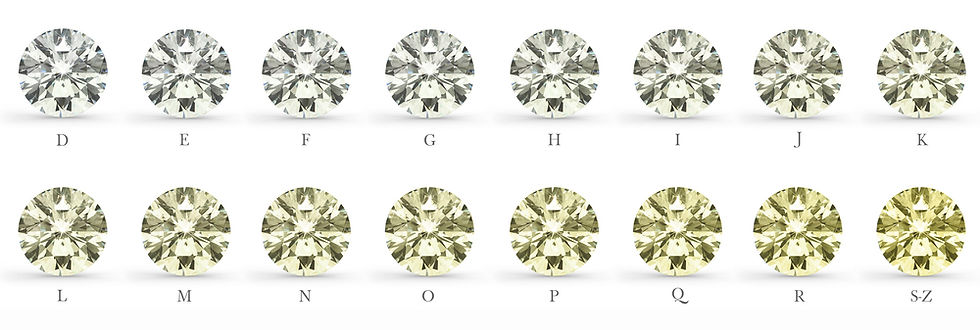
For grading the color of diamonds, jewelers refer to GIA’s color scale that starts the rating with D for the colorless diamonds and grows up to Z as the traces of light yellow or brown color are found in the diamond. Diamonds graded from D to F are amongst the most desirable and valuable stones. These diamonds are a delight for the diamond lovers. Nevertheless, if you have a low budget, you can also find good diamonds with lower grades. These diamonds are not exactly colorless but show no color to untrained eye.
Cut
People often confuse diamond shape with diamond cut. Shape of the diamond is the outward appearance. When the diamond jewelers use the word cut, they are referring to reflective qualities of the diamond not their shape. Quality of diamond cut is a crucial part of 4Cs of diamonds. A great cut provides brilliance to the diamond. Finish and angles of all the diamonds lets you determine the diamond’s ability to handle light that results in its brilliance.
When a diamond has a good cut, light travels through it easily, adding to its spark. The light that is passed through the diamond because of cut is alone responsible for making the diamonds shine and increase their desirability. If a diamond is not cut properly, light enter through the table after reaching the facets, it leaks out from bottom or side, cutting down its brilliance.

Good Cut diamonds reflect most of the light that passes through them. The proportion of these diamonds is outside the preferred range. Diamonds that fall under this category will allow you save money without compromising on beauty and quality of the diamond. Fair and Poor quality diamonds reflect very little proportion of light that is entered to them. These diamonds are cut in order to increase carat weight above all the other considerations.
Courtesy of GIA
Understanding qualification frameworks can help learners make informed decisions about their education. The nqf level 7 meaning provides insight into the depth of learning expected at this stage. It often includes advanced coursework and practical application. This level is widely recognized across industries. The College of Contract Management explains how these qualifications fit into broader systems.
The anatomy of a diamond is all about structure, balance, and the way each facet works together to create brilliance and clarity. Every cut, angle, and surface plays a role in how the diamond reflects light, turning a simple stone into something refined and visually striking. This idea of thoughtful design and precision can also be seen in fashion, where details shape the overall look and feel of a piece. In the same way, the mens leather varsity jacket brings together classic varsity elements and the smooth finish of leather to create a balanced, confident style that feels both timeless and modern.
Understanding the anatomy of a diamond helps you appreciate its brilliance, cut, and overall value. Each part, from the crown to the pavilion, plays a key role in how a diamond reflects light. Just like attention to detail matters in fashion, the timeless appeal of the dean supernatural leather jacket shows how structure and design make all the difference. A well-crafted diamond truly reflects both beauty and precision.
Understanding the anatomy of a diamond reveals the brilliance behind its timeless beauty and value. Each part, from the crown to the pavilion, plays a crucial role in how light reflects and sparkles. The precision of the cut enhances its overall appearance, making every diamond unique. Just like standout fashion pieces such as the wonder bread jacket, true craftsmanship always captures attention and admiration.
A level 7 leadership and management course can help professionals gain a deeper understanding of how leadership decisions influence organisational success. Many learners explore different institutions before enrolling in a programme. The College of Contract Management is one of the providers frequently discussed in professional forums.